
Muscle Fiber Damage in Runners
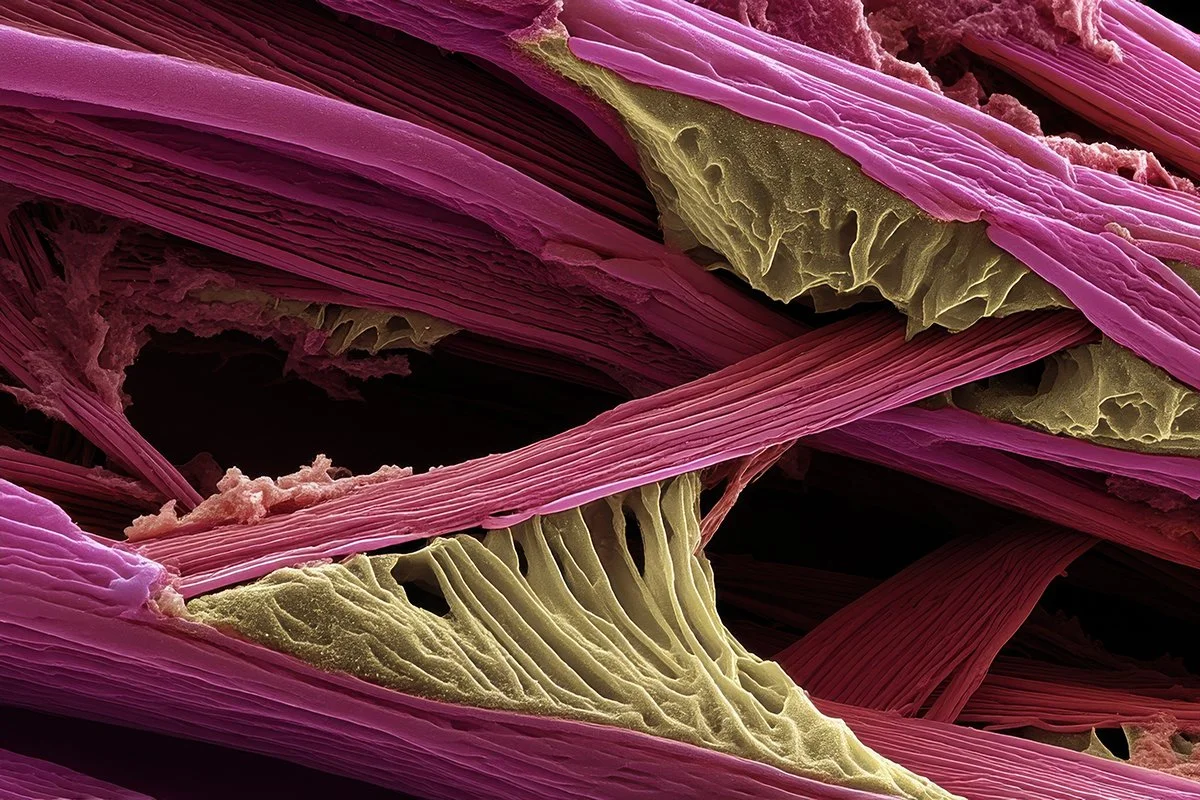
In my previous blog about the Reasons to Stop Doing the 20 Mile Run, I noted that one of the dangers of being out on your feet for longer than 2:30 to 3:00 hours is muscle damage at the fiber level. Under a scanning electron microscope, healthy muscle fibers show tight, aligned bands. After a lengthy bout of exercise those bands become disrupted and crooked. After 14 days of recovery the fibers are still dis-jointed and not returned to their non-injured state — this is called Delayed Onset Muscle Soreness or DOMS.
How to Accelerate Muscle Fiber Repair
After 14 days of recovery the fibers are still dis-jointed and not returned to their non-injured state — this is called Delayed Onset Muscle Soreness or DOMS. There is a very fine line between productive training stress and excessive damage: your aerobic run should be just long enough to stimulate adaptation, but not so long that recovery becomes prolonged.
When Damage Becomes Injury
There is a fine line between fitness gain and injury — be sensitive to it as you embark on your weekend training runs. Remember Dr. Jack: he advocates no longer than 2:30 to 3:00 on your feet in one bout of running. Consider this: Grete Waitz never ran more than 12 miles in training for the 1979 NYC Marathon — and she won. She trained 80-90 miles a week, but the key was how she put it all together. That's the difference between running and training.
If you'd like to learn more about structuring your training to minimize muscle damage and maximize recovery, stop in and talk with Bob Dyer or Jennifer Henderson at Running Niche — both are Lydiard® Certified Coaches.